Truck Parking Club
- 4.0
- Rating
- 1.00M
- Installs
- Free
- Price
 Analysis by App-foxy
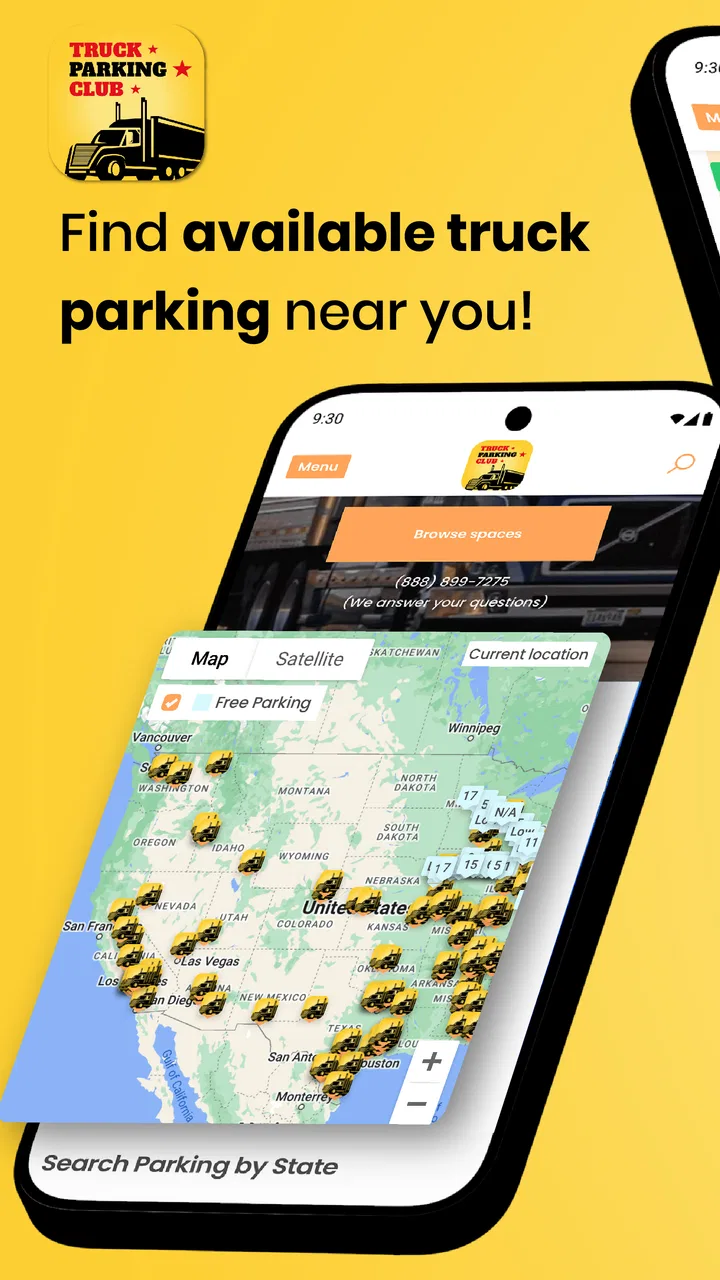
Finding a legal place to stop a truck is a different problem from finding a nearby fuel station or drawing a route between two cities. A car-focused navigation app can get you to an exit, yet still leave you wondering whether a full-size rig can enter, turn, park, and leave without blocking anyone. Truck Parking Club is built around that practical gap, with a focus on truck parking across America. I found its value easiest to understand when treating it as a parking-search tool rather than as a complete replacement for everyday navigation.
The app comes from Truck Parking Club and sits in the Maps & Navigation category. It is free to use, rated for Everyone, and has passed the one-million-install mark. Its current version is 2.0.5, and it runs on Android 6.0 or later. Those details make it accessible to a wide range of drivers, including people using older phones in the cab, although the quality of a parking search still depends on the phone’s connection, location accuracy, and the information available for a particular place.
How I use it before and during a run
I use Truck Parking Club as an early planning check, not a last-second promise of an open space. This section looks at how I fit a parking search around a route and what I verify before committing to a candidate; from there, the next section turns to the moments when the app’s results or map view may not be enough.
You May Also Like

 Blood Strike: 2.5 Anniversary
Blood Strike’s Loadouts Turn Every Drop Into a Tactical Gamble
A close look at Blood Strike’s custom loadouts: how fast access to signature weapons reshapes its battle royale rhythm, rewards preparation, and narrows the gap between fights.

 Pandora - Music & Podcasts
Pandora’s Music Is Easy to Start, but Harder to Recover
Pandora’s strength is its low-effort path from a seed to a station. Its weak spot is how much confidence it asks you to place in connection, setup, and quiet recovery.

 8 Ball Pool
 Is Built on Rivalries, Rematches, and Routine
A close look at the rivalries, rematches, shared routines, and unanswered safety questions that turn a quick pool match into a persistent mobile community.

 Samsung Music
’s Quiet Strength Is Playing What You Already Own
Its reach comes less from spectacle than from dependable access to a personal library. That simplicity is both the app’s strongest retention engine and its ceiling.

 AccuWeather: Weather Radar
AccuWeather Review: A Quick, Clear Forecast for Everyday Decisions
For everyday plans, the best forecast is the one you can understand quickly. AccuWeather makes rain timing, radar, and local conditions easy to act on, with a few trade-offs.

 Hill Climb Racing
Why Hill Climb Racing Still Turns Crashes Into One More Run
A tiny car, a bumpy hill and one more upgrade: Hill Climb Racing keeps resurfacing because its simple chaos makes every near-miss feel personal.
More From Our News Desk



A simple baseline workflow that avoids last-minute searching
My preferred routine starts before I am close to needing a break. I open the app while the truck is still moving through the earlier part of a trip, search around the next realistic stopping area, and look at the available choices with enough time to compare them. That small change matters. Searching only after the nearest rest area is full turns a parking tool into an emergency tool, which is when every limitation becomes more frustrating.
I first think about the route in broad terms rather than choosing the closest result immediately. A location a few miles farther from the highway may be more useful if it gives me a better chance of arriving before the end of my planned driving window. I also consider whether the stop fits the purpose of the break: a short pause, an overnight stay, or a place where I need enough room to maneuver. The app helps me identify candidates, but I still make the final judgment as a driver familiar with the vehicle.
One realistic example is an evening delivery run when I know I will need to stop after the next major town. Instead of waiting until the final fuel stop, I check the surrounding area in Truck Parking Club, note two or three plausible locations, and keep the most practical option in mind. If the first choice is occupied or unsuitable when I arrive, I already have a backup area to inspect. This is more useful than repeatedly searching from scratch while tired.
I would not use the app as the only source of turn-by-turn guidance. A dedicated navigation app may be better for live traffic, road closures, lane instructions, bridge restrictions, or a route tailored to the truck’s dimensions. Truck Parking Club is strongest at answering a narrower question: where might I park the truck near the area I am targeting? I use it alongside navigation, not instead of navigation.
What the map can and cannot settle for you
A map marker is a starting point, not a guarantee that the entrance will work for every combination of tractor, trailer, weather, and time of day. Before committing to a location, I check the approach on my main navigation app and think about the final turn. A place can look conveniently close on a map while being awkward to reach from the correct side of a divided road, or while requiring a turn that is uncomfortable for a long trailer.
This is one of the app’s important trade-offs. Its parking focus is more relevant to a truck driver than a general map’s broad collection of businesses, but no parking directory can remove the need for judgment at the entrance. I pay attention to the road classification, nearby intersections, and whether the final approach appears suitable. If the location is unfamiliar, I treat it as a candidate until I have checked the surroundings.
Another useful habit is separating “near my destination” from “near my route.” A parking place may be excellent for the next morning’s delivery but inefficient for tonight if reaching it requires leaving the route and retracing the same roads. I compare the parking search with the actual trip plan, especially when the remaining driving time is limited. This prevents the common mistake of selecting a theoretically nearby space that costs more time than it saves.
Settings and phone habits worth checking
The most important preparation is not a clever shortcut; it is making sure the phone is ready to show the right area. I check that location access is working, that the map is centered on the place I intend to search, and that the app has enough connection to refresh results. If the phone is mounted low in the cab or surrounded by poor reception, I prefer to search earlier rather than depend on a fresh result at the last possible moment.
I also keep the search process deliberate. If I am looking for a stop near a city, I avoid assuming that the first visible marker is automatically the best answer. I zoom out enough to see alternatives, then zoom back in to inspect the approach. This two-level view is particularly helpful when several options appear close together but sit on different sides of a highway or in different industrial areas.
Because the app is free, it is easy to leave it installed as a dedicated parking reference even when another app handles the rest of the journey. That arrangement works well on an Android phone meeting the minimum operating-system requirement, but older hardware may still feel slower when switching between apps. I would close unnecessary applications before a long search and keep the phone charged, especially if the device is also providing navigation.
I do not treat a phone setting as a substitute for road awareness. The screen should be checked while stopped or by a passenger, never while the truck is moving. For solo drivers, I plan the search during a legal break, at a fuel stop, or before departure. The best workflow is the one that reduces rushed decisions rather than encouraging more screen time behind the wheel.
Faster patterns for repeat users
After using the app a few times, I found that speed comes from repeating a small process. I begin with the intended stopping region, scan for several candidates, compare them with the route, and then verify the final approach elsewhere. I do not keep reopening the same search without a reason. That habit saves attention and makes it easier to notice when a new option is genuinely better.
For regular lanes, I build a personal mental shortlist from places I have already inspected. Truck Parking Club is useful for discovering possibilities, while my own experience tells me which areas are comfortable at night, which approaches are stressful, and which locations are only practical under certain conditions. I still recheck before each trip because availability and road conditions can change, but I do not treat every journey as if I have no prior knowledge.
A second pattern is to search in layers. First I look near the planned stopping point. Then I widen the area in one direction along the route, followed by the other direction, instead of jumping randomly across the map. This gives me a backup plan that is geographically sensible. If the preferred location fails, I know whether the alternative means continuing forward or backtracking, which is much more useful than simply having a long list of pins.
A third pattern is to search earlier on difficult nights. Bad weather, major events, construction, and heavy freight traffic can make a normal parking plan unreliable. The app cannot predict my personal level of fatigue or guarantee a space, so I use it earlier when the cost of failure is higher. I would rather identify several possible areas before sunset than make a tired search after the first planned stop does not work.
These habits also clarify who benefits most. The app suits long-haul drivers, owner-operators, and anyone who regularly needs truck-sized parking across American routes. It can also help a new driver learn how to think about stopping areas. On the other hand, someone who only drives a car, rarely travels beyond familiar streets, or needs a full navigation system with live route guidance may get more value from a general maps app.
Where the app is helpful but not enough
The biggest limitation is that finding a listed parking option is not the same as reserving a guaranteed space. I plan with alternatives because a map-based result cannot remove real-world uncertainty. A location may be busy, temporarily inaccessible, difficult for a particular trailer, or less suitable than it appeared on the screen. That is not a reason to dismiss the app; it is a reason to use it as part of a larger decision process.
I also remain cautious about assuming that every result fits every truck. Length, turning radius, trailer configuration, cargo, and the driver’s comfort level all matter. A space that works for one rig may be awkward for another. When a stop looks tight or the approach seems questionable, I prefer a farther, simpler option. Saving a few miles is not worth creating a difficult maneuver at the end of a long day.
Another boundary is the app’s role within the wider trip. It is not the tool I would choose for weather alerts, fuel-price comparisons, detailed truck restrictions, or comprehensive dispatch planning. A general navigation service may offer stronger traffic information, while a fleet’s own system may have route rules and operational details that a parking-focused app does not replace. The sensible setup is complementary: use Truck Parking Club for parking discovery and another trusted source for the rest.
New users may also need a short adjustment period. The app’s purpose is clear, but the best results come from learning how to interpret a parking search in the context of a real truck route. I would not judge it after one rushed search near a full lot. Give it a few trips, compare the candidates with actual approaches, and decide whether its coverage and workflow match the lanes you drive.
Who should install it, and who should skip it
I would recommend trying it if parking is a recurring source of stress. The free price removes the main barrier to testing it, and the Everyone age rating makes it straightforward to keep available on a shared or personal device. Its average rating is 4.0 from around 1.7 thousand ratings, which suggests a generally positive reception without implying that every driver will have the same experience.
The app is especially worthwhile for drivers who cross unfamiliar areas and want a parking-specific view before they reach the end of the day. It is also useful for planning a stop around a delivery appointment: I can think about where to spend the night without relying only on whatever appears in a broad business search. The roughly 290 written reviews add context from other users, but I still give more weight to my own checks of the route and entrance.
I would skip it as a primary tool if I only needed car navigation, if I expected guaranteed availability, or if my work already provides a trusted parking workflow that covers every route I drive. I would also avoid depending on it alone when the trip involves complicated truck restrictions or a highly time-sensitive arrival. In those cases, the app may still be a useful second opinion, but it should not replace the information source responsible for the trip.
My verdict after building a repeatable routine
Truck Parking Club succeeds because it addresses a specific problem that general maps often handle poorly: narrowing the search to places relevant to truck parking across America. I like it most when I use it before the pressure builds, compare several candidates, and verify the final approach with my normal navigation tools. That workflow turns the app from a last-minute pin finder into a practical part of trip planning.
Its limits are equally important. It does not make a space available, remove the need to inspect an entrance, or replace full truck navigation. Drivers who expect one app to manage traffic, restrictions, fuel, routing, and parking may find it incomplete. Experienced users will get better results by combining it with a route planner, their own knowledge of recurring lanes, and a backup plan for every important stop.
With more than one million installs and a free Android release, it is easy to test without committing money. I would keep it on a truck driver’s phone if parking uncertainty is a regular part of the job. My final recommendation is practical rather than enthusiastic for its own sake: use it early, search in layers, check the approach, and never confuse a promising result with a guaranteed space. Used that way, the app earns its place as a focused parking companion.
FAQs for Truck Parking Club
01What is Truck Parking Club, and how does it work?
Truck Parking Club is a platform designed to help truck drivers find and reserve parking spaces for commercial vehicles. After entering a location or route, you can browse available properties, review space details, check pricing, and make a reservation when suitable parking is available. Listings may include information about access, amenities, vehicle restrictions, and booking requirements, so it is important to read each listing carefully before confirming a stay.
02Can I use Truck Parking Club to reserve parking for any type of truck or trailer?
Parking availability depends on the individual property and the size or type of vehicle you operate. Some locations are suitable for tractor-trailers, while others may be intended for straight trucks, bobtails, or smaller commercial vehicles. Before booking, check the listing’s dimensions, access instructions, permitted vehicle types, and any restrictions concerning trailers, oversized loads, or overnight parking to avoid arriving at a space that cannot accommodate your equipment.
03How much does parking cost on Truck Parking Club?
Prices vary according to the location, parking duration, demand, property features, and the type of vehicle being parked. Some spaces may offer daily, weekly, or monthly rates, while additional charges or taxes could apply during checkout. The app or website should display the applicable price before you complete the reservation, but drivers should also review cancellation rules, service fees, and any property-specific charges included in the booking terms.
04Is Truck Parking Club safe and reliable for overnight truck parking?
Truck Parking Club can make it easier to locate organized parking, but the level of security differs from one property to another. Some locations may provide fencing, lighting, cameras, gated entry, or on-site management, whereas others may offer only a designated parking area. Review the listing description, photos, host information, and user feedback before booking. Drivers should also follow the property’s access instructions and avoid assuming that every location provides the same security features.
05Can I cancel or change a Truck Parking Club reservation?
Cancellation and modification options depend on the specific booking and the property’s stated policy. Before paying, review the deadlines, refund conditions, and rules for changing arrival dates, departure dates, or vehicle details. If your plans change after booking, use the reservation management tools or contact the relevant support channel as soon as possible. Waiting too long may result in partial refunds, nonrefundable charges, or the loss of the reserved parking space.
Pros
- Connects drivers with private truck parking spaces.
- Can help avoid crowded
- unreliable public truck stops.
- Useful for planning parking before reaching a destination.
- Listings may offer more privacy than busy rest areas.
- Supports a practical solution to limited truck parking availability.
Cons
- Availability depends heavily on location and host listings.
- Parking conditions and amenities may vary between properties.
- Some spaces may require advance booking or coordination.
- Prices can differ significantly depending on demand and area.
- Drivers should verify access
- security
- and vehicle-size suitability before booking.

Truck Parking Club
Gallery